
 Facebook
 X
X LinkedIn
 Forward
The Future of School Health (CSHS Session 1)
The recording is this session is now available here: Recording
This course is the first of four sessions focused on school nurse leaders' application of tools developed by the National Association of School Nurses (NASN) to support school nurse practice and optimal student health outcomes. This session will explore the school nurse leader's role in applying the principles of Leadership and Quality Improvement from the NASN School Nursing Practice Framework™ and understanding of the Massachusetts Department of Elementary and Secondary Education (DESE) updated SISP Evaluation rubric.
By the end of the four training sessions, the learner will be able to express that their understanding to use and apply the Framework, School Nursing: Scope and Standards of Practice, and the three pillars of the NASN Strategic Plan in their school nurse practice, planning, and evaluation has improved.
After the completion of all four sessions, participants will be able to:
- Apply the Framework principles of Leadership and Quality Improvement by identifying and implementing at least two evidence-based strategies that demonstrate measurable improvement in student health outcomes and school nursing practice.
- Evaluate the nursing process and at least two standards of professional performance related to school nursing practice summarizing their application in the school setting.
- Develop one measurable Continuous Quality Improvement (CQI) goal that supports optimal student outcomes and aligns with the three pillars of the NASN Strategic Plan.
Target Audience
- School Nurse Managers in districts that have received either the Model or Affiliated CSHS grant
- School health professionals interested in this topic
Learning Objectives
After completing this training session, participants will be able to:
- Identify two components from the NASN School Nursing Practice Framework™ leadership principle that would support student outcomes and improve school nurse practice.
- Identify two components from the NASN School Nursing Practice Framework™ quality improvement principle that would support student outcomes and improve school nurse practice.
- Analyze Massachusetts' regulatory framework for educator evaluation and apply the new model rubric to their school nursing practice setting.
- Apply the updated Specialized Instructional Support Personnel (SISP) Evaluation Rubric for School Nurses to strengthen the evaluation process, enhance school nursing practice, and improve student outcomes.
- Develop professional practice goals aligned with nursing team priorities using the SISP system to support efficient, meaningful quality improvement efforts.
Course summary
- 2.50 ANCC
- 2.50 Participation
Note: This agenda is subject to change
Topic | Time |
|---|---|
SHIELD and MA DPH Welcome and Updates | 15 minutes |
Theoretical Presentation: The School Nursing Practice Framework Overview by Elizabeth Clarke, MSN, RN, NCSN, FNASN (retired) | 50 minutes |
Break | 10 minutes |
Application to Practice: The School Nurse Evaluation System by Shannon Clancy, MEd, BA, Kathleen Schoemer, MSN, RN, CPNP-BC, Cathryn Hampson, MSN, RN, NCSN, STTI and Karen Robitaille, MSN, MBA, RN, NCSN | 60 minutes |
Q&A for all Presenters | 10 minutes |
Summary and Next Session | 5 minutes |
Boston University Chobanian & Avedisian School of Medicine asks all individuals involved in the development and presentation of Accredited Continuing Education activities to disclose all financial relationships with ineligible companies. This information is disclosed to all activity participants prior to the start of the educational activity. Boston University Chobanian & Avedisian School of Medicine has procedures to mitigate all relevant financial relationships with ineligible companies. In addition, faculty members are asked to disclose when any unapproved use of pharmaceuticals and devices is being discussed.
In accordance with the Standards for Integrity and Independence in Accredited Continuing Education, all relevant financial relationships that faculty, planners, authors, and anyone who may be in control of content have with ineligible companies have been mitigated.
None of the speakers or planners or anyone in control of content for this accredited continuing educational activity have any relevant financial relationships since the content does not relate to any products or services of an ACCME-defined ineligible company; therefore, there are no relevant financial relationships to disclose or mitigate.
Planners
 Jacquelyn Buige Raco, MSN, MEd, CSSHS, CSN, RN
Director of Nursing Education, BU SHIELD
 Amy E. Dark, DNP, MSN-PH, BA, RN
Strategy Development Specialist, BU SHIELD (retired)
SHIELD Senior Operations Manager/Planner: Lesly Zapata, MPH
Panelists/Speakers
 Karen Robitaille, MSN, MBA, RN, NCSN
Director of School Health Services, Massachusetts Department of Public Health
Prior to becoming the Director of School Health Services for the Massachusetts Department of Public Health in 2019, Karen spent thirteen years as the Director of Health, Safety and Equity Programs for the Northampton Public Schools, and had additionally functioned as the Program Director for the Northampton Prevention Coalition, which was federally funded to reduce youth substance use in the City of Northampton. Karen has worked in school health since 1997, after several years working in adult and pediatric inpatient and homecare settings and has also served her hometown as Vice-Chair of the East Longmeadow Board of Health from 2016-2021. She received her Bachelor of Science in Nursing from Fitchburg State University, her Master's in Nursing Management from Elms College, and her MBA, with a concentration in Healthcare Leadership, also from Elms College. Karen is a Nationally Certified School Nurse, a member of National Association of School Nurses/Massachusetts School Nurse Organization, a member of the Board of Directors of the National Association of State School Nurse Consultants, and an inactive member of Sigma Theta Tau, Epsilon Beta chapter.
 Elizabeth Clark, MSN, RN, NCSN, FNASN (retired)
School Nurse Subject Matter Expert
Elizabeth has over 25 years of experience as a school nurse and a school health services administrator. She is a certified school nurse emeritus and was inducted into the National Association of School Nurses Academy of Fellows in 2019. She was formerly employed by the National Association of School Nurses as a Nursing Education and Practice Specialist for 5 years and developed professional development for school nurses based on the NASN School Nursing Practice Framework. She was an adjunct faculty at the University of Northern Colorado School of Nursing, instructing students in public/community health clinicals. She is currently retired.
 Shannon Clancy, MEd, BA
Educator Effectiveness Coordinator at the Massachusetts Department of Elementary and Secondary Education (DESE)
Shannon Clancy is an Educator Effectiveness Coordinator at the MA Department of Elementary and Secondary Education. She leads projects supporting PK-12 educator development and retention, including educator evaluation, induction and mentoring, and recognition initiatives. Before DESE, Shannon was an elementary school teacher and worked for an education non-profit focused on school and district improvement. She has a B.A. in Political Science from Boston College and an M.Ed. in Education Policy and Management from the Harvard Graduate School of Education.
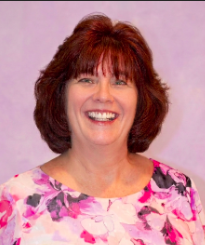 Kathleen Schoemer, MSN, RN, CPNP-BC
Lead Nurse, Oxford Public Schools
School Nurse Subject Matter Expert
Kathleen Schoemer has worked in school health since 2009, beginning in a per diem role before moving into a full-time position in 2014 at Clara Barton Elementary School in Oxford, Massachusetts. She currently serves as Lead Nurse for Oxford Public Schools and provides direct care to students in grades three through five with acute and chronic health needs. Throughout her career, Kathleen has practiced child and family-centered care. She earned a Master of Science in Nursing from Yale University School of Nursing in 1997, specializing as a pediatric nurse practitioner. She later worked as a pediatric nurse practitioner at the University of Maryland Medical System, dividing her time between the Pediatric Gastroenterology and Nutrition Clinic and a liaison role connecting pediatric community providers with pediatric specialists. In 2020, she joined the Massachusetts School Nurse Organization (MSNO) Board as Region 3 Co-Chair. She has also served as the liaison between MSNO and the Massachusetts Medical Society Committee on Student Health and Sports Medicine, as well as MSNO’s liaison to the Massachusetts Department of Elementary and Secondary Education (DESE). She now serves as President of MSNO.
Kathleen is married and has two daughters. Her older daughter studied mechanical engineering and works as a Team Lead for Ecolab in Greensboro, North Carolina. Her younger daughter graduated from Duquesne University in May with a BSN and will work in the emergency department at St. Francis Hospital in Hartford, Connecticut. Kathleen enjoys spending time with her family, especially traveling together.
 Cathryn Hampson, MSN, RN, NCSN, STTI
Supervisor of Health Services, North Middlesex Regional School District
School Nurse Subject Matter Expert
Cathryn is the Supervisor of Health Services in the North Middlesex Regional School District. She received her Master of Science in Nursing from St. Joseph's College of Maine and her Bachelor of Science in Nursing from Fitchburg State University. She has 40 years of experience as a nurse, and 30 of those are in school health. She has worked in hospital, community, and school settings throughout the United States and South America. Cathryn serves in her school community on several district committees and is also active professionally at the regional and state level with the Massachusetts School Nurse Organization. She serves on the Children's Mental Health Task Force with the Massachusetts Chapter of the American Academy of Pediatrics as the MSNO Liaison. Cathryn is the recipient of the 2026 Anne Sheetz Award for excellence in leadership.
 In support of improving patient care, Boston University Chobanian & Avedisian School of Medicine is jointly accredited by the Accreditation Council for Continuing Medical Education (ACCME), the Accreditation Council for Pharmacy Education (ACPE), and the American Nurses Credentialing Center (ANCC), to provide continuing education for the healthcare team.
Nursing Contact Hours: 2.50 contact hours, of which 0 are eligible for pharmacology credit
SHIELD is a DESE-approved provider for PDPs. PDP certificates are issued for programs/series lasting 10 or more hours on a topic. CNE certificates are also issued for eligible courses. Learners may use and combine CNE certificates toward PDPs. For questions about PDPs or other credits we offer, check out our FAQ page.
*After completing all four sessions, learners will be eligible for PDPs.
Available Credit
- 2.50 ANCC
- 2.50 Participation
Price
Disclaimer
THESE MATERIALS AND ALL OTHER MATERIALS PROVIDED IN CONJUNCTION WITH CONTINUING EDUCATION ACTIVITIES ARE INTENDED SOLELY FOR PURPOSES OF SUPPLEMENTING CONTINUING EDUCATION PROGRAMS FOR QUALIFIED HEALTH CARE PROFESSIONALS. ANYONE USING THE MATERIALS ASSUMES FULL RESPONSIBILITY AND ALL RISK FOR THEIR APPROPRIATE USE. TRUSTEES OF BOSTON UNIVERSITY MAKES NO WARRANTIES OR REPRESENTATIONS WHATSOEVER REGARDING THE ACCURACY, COMPLETENESS, CURRENTNESS, NONINFRINGEMENT, MERCHANTABILITY OR FITNESS FOR A PARTICULAR PURPOSE OF THE MATERIALS. IN NO EVENT WILL TRUSTEES OF BOSTON UNIVERSITY BE LIABLE TO ANYONE FOR ANY DECISION MADE OR ACTION TAKEN IN RELIANCE ON THE MATERIALS. IN NO EVENT SHOULD THE INFORMATION IN THE MATERIALS BE USED AS A SUBSTITUTE FOR PROFESSIONAL CARE. IN NO EVENT SHOULD INFORMATION IN THE MATERIALS REGARDING LAWS, REGULATIONS, OR LEGAL LIABILITY BE CONSIDERED LEGAL ADVICE OR USED AS A SUBSTITUTE FOR CONSULTING WITH AN ATTORNEY.
Special Services/Dietary Needs
Boston University strives to be accessible, inclusive and diverse in our facilities, programming and academic offerings. Your experience in this event is important to us. If you have a disability, require communication access services for the deaf or hard of hearing, or believe that you require a reasonable accommodation for another reason please contact the BU-CCE Office at least 3 weeks before the event to discuss your needs. For in-person meetings with meals, we will work to accommodate dietary requests (including, but not limited to: kosher, vegetarian, low cholesterol, and low sodium) received in writing at least three weeks prior to the start of the conference. Please contact us at [email protected].
Copyright
This material is copyrighted by the Massachusetts Department of Public Health (MDPH). MDPH grants permission for use of these materials for non-commercial educational use only, provided credit is given to the MDPH. Modification of content is permitted only with prior approval of the MDPH School Health Unit.